Panama Canal Congestion Grows as Global Waterways Face New Disruptions

A ship delay at one canal used to be a routing problem. Now it can spread across oceans. The Panama Canal is facing rising congestion as global waterways absorb fresh shocks, from the Middle East conflict to drought-driven low-water limits.
For companies moving goods between Asia, the Americas, and Europe, the problem is no longer isolated. The same vessels, boxes, crews, and port slots are being pulled in different directions at once.
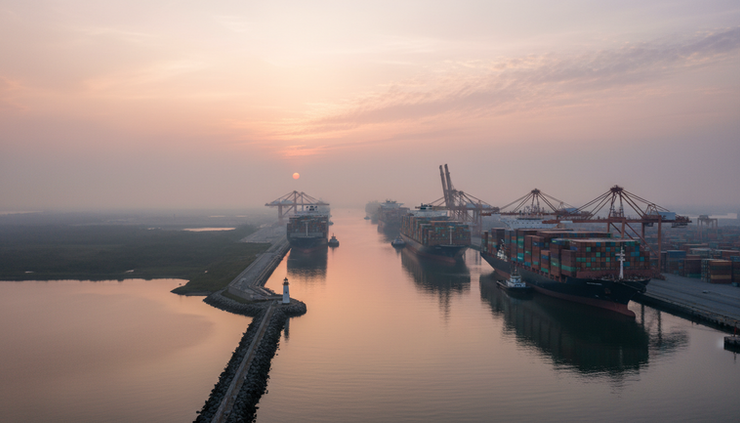
The Panama Canal is under pressure from both water levels and vessel demand
The Panama Canal depends on freshwater to move ships through its locks. When rainfall is low, canal authorities may need to limit vessel draft, reduce daily transits, or apply other restrictions to protect operations.
That creates a difficult choice for carriers. A ship may need to carry less cargo, wait longer for a transit slot, or take a longer route. Each option adds cost or time.
The concern is not only the queue at the canal. The greater risk is schedule instability. When ships miss planned windows, ports down the line receive vessels in uneven waves. Some days bring too much traffic. Other days bring gaps. That makes berth planning, trucking, warehousing, and customs timing harder to manage.
For freight forwarding and logistics teams, the key issue is predictability. A slightly longer transit time can be planned for. A changing transit time is harder.

Middle East conflict is adding strain beyond the Red Sea
The war in the Middle East has disrupted shipping through the Red Sea and Suez Canal corridor, especially as security risks have pushed many carriers to avoid the area. Ships that would normally use that shortcut have diverted around southern Africa.
Those longer voyages absorb vessel capacity. They also delay equipment returns and shift sailing schedules. Even if a shipment does not pass through the Red Sea, it can still feel the effect through fewer available sailings, port bunching, and higher pressure on alternative routes.
This is where the Panama Canal becomes more exposed. When one major waterway becomes less reliable, carriers look at other lanes. But Panama is already dealing with its own limits. More demand does not always mean more available passage.
Global chokepoints are starting to interact
Shipping networks are built around a few narrow passages. The Panama Canal, Suez Canal, Red Sea, Bab el-Mandeb Strait, Bosphorus, and key port gateways all carry traffic that cannot be replaced easily.
When one chokepoint struggles, cargo moves elsewhere. When several struggle at the same time, the system has less room to adjust.
Common effects include:
Longer sailing times
Rerouted vessels can add days or weeks to a voyage.
Equipment imbalance
Containers may pile up in one region while another waits for empties.
Port bunching
Delayed vessels arrive close together, creating yard and berth pressure.
Rate volatility
Capacity uncertainty can push rates up quickly on affected lanes.
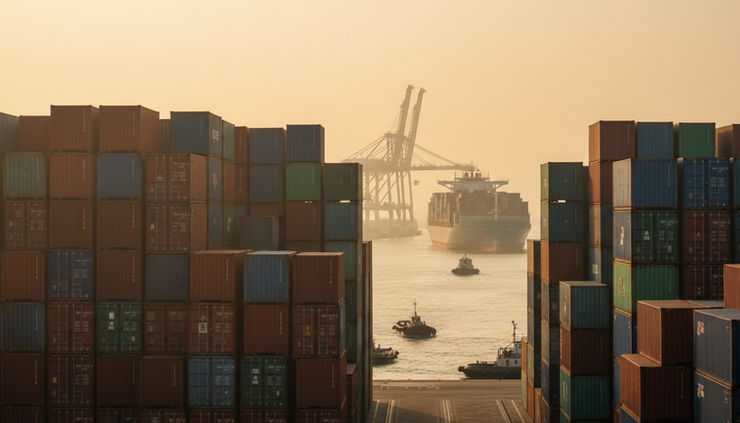
Shippers need wider buffers and clearer choices
The best response to canal issues is not panic. It is better planning.
Shippers should review lead times on lanes that depend on canal transit, especially cargo moving between Asia and the US East Coast, Latin America, or Europe. When possible, build buffer time into purchase orders and delivery promises. For urgent goods, compare the true cost of alternative routings, including inland transport and inventory risk.
It also helps to split risk. Relying on one lane, one port pair, or one sailing pattern can leave cargo exposed when conditions shift. A mix of routings may cost more on paper, but it can protect supply when waterways tighten.

The takeaway
The Panama Canal’s congestion is part of a larger pattern. Drought, conflict, security risks, and rerouting are now colliding across the world’s major waterways.
The practical move is to treat transit times as flexible, not fixed. Build in buffers, watch canal advisories, compare route options early, and keep cargo plans ready to change. In a shipping market shaped by multiple disruptions, the fastest plan is often the one that leaves room to adapt.




Comments